One of the issues I find problematic in theist vs atheist arguments is an assumption that "God only exists, if things cannot be explained". I don't know how this came about, or why it's so commonly the deciding factor in discourses, but it seems a stretch to regard as a fact. It would be on par with saying, "because we know how the human brain works, the human consciousness doesn't exist". Are we willing to insist that as fact? That would mean that this argument itself is quite pointless, because the argument doesn't exist without consciousness. If we can at least begin with agreeing that humans have consciousness, then why cannot there also be other forms of explainable consciousness?
Another argument assumes that, since there are crappy religious people, there is reason to believe the God of the religion also does not exist. Certainly, some religions are little better than cults—but the actions of cults and religions does little, if nothing, to disprove the existence of a God. If a toddler behaves crazily, does that mean they were born in a lab? Again the assumptions are distracting and inconclusive at best. So in order to genuinely take on the discussion of the existence of God, I think the most valuable consideration is whether or not we validate the nature of being human.
Many natural human inclinations have remained constant for (at least) as long as we have record: experiences and visions, pursuits of betterment - evolution - through harmony and community. In a way, believing in God is synonymous with the belief that human collaboration/unification is necessary to evolve. Assigning a common enemy and fighting together reduces lower scale chaos and squabbles. Unification means survival; survival means a chance to evolve. There is a reason historians note the unifying nature of war, and wars are fought for all kinds of gains. In the case of religion, it's a "spiritual war" against "spiritual evil". Many times, religions have identified the "enemy" as being embodied by other humans, and assume that annihilation of the threat (or competition) is acceptable—even necessary. This produces the desirable effect of larger scale unification and collaboration, at an tragic cost, but can we really say that disproves God?
From the outside, it could be interpreted that this "enemy" which religions are fighting is, in reality, species extinction. The versatility and uniqueness of our species prompts a necessity to create rules (religious traditions) as a best method of survival and evolution through interpersonal cooperation on a large scale. The religious system provides rules for personal conduct in order to promote unification. So the religious system is evolve to unify; unify to survive; survive to evolve.
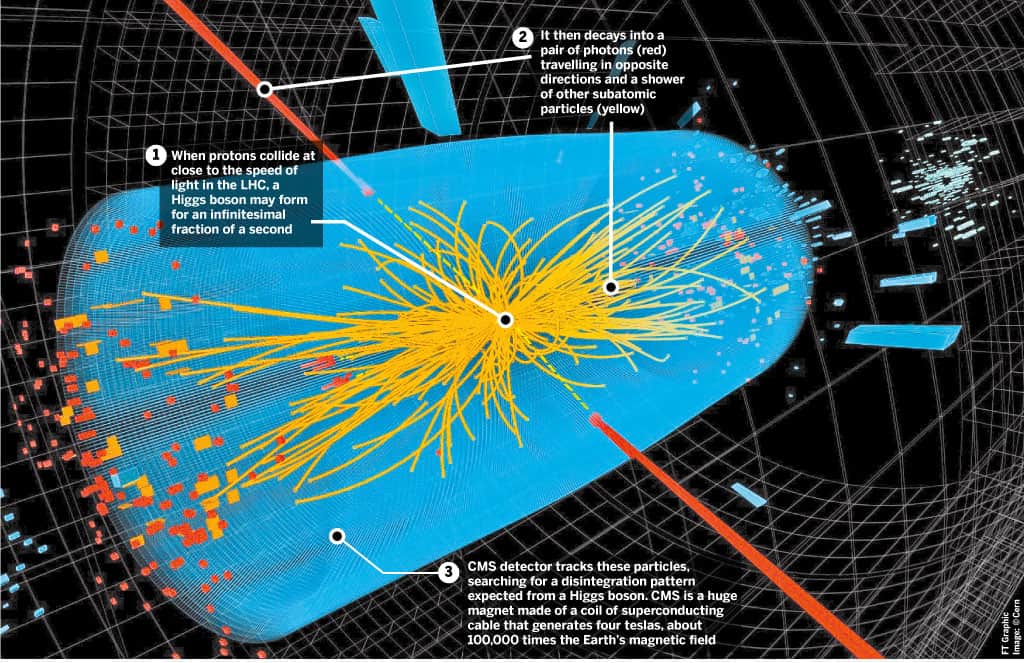
Now, what if God were a measurable, sentient particle? This is not entirely my idea - there is already a particle with this nickname attributed with being the very building block of the universe - but what if it's actually the case, whether it's the one already found or one on a scale we don't yet have equipment to observe? Either way, the inherent oneness-seeking in humanity could make sense, if there exists a unifying physical element to our being.
If we have sentience via a chemical process and we experience God with these same chemical processes, what is really the difference between God being "real" and God being a natural component inside us and everything we know and which we can possibly sense? I claim none.
If God is the very substance responsible for the scientifically-suggested Big Bang—the substance which represents the logic of the universe, integral to all the things— human consciousness is a natural and true reality, and the natural inclination of humans to seek community and unification promotes survival of the species,
the existence of a God becomes quite accessible. Unifying with our original substance = survival.
As a side note, what I really love about this concept, is how much space and mental access it provides for the myths, miraculous and placebo. Basically, you can speculate that whenever the God "particles" are densely located, for example when someone or a community approaches a kind of synchronization with the true "mind of God" (nature of the original and foundational substance), there can occur small scale "big bangs" - creation or substitution of things which did not exist: eg. creating a healthy organ in place of a sick one or creating an image or material where there was nothing. We no longer have to explain that every single weird thing experienced over the millennia was invalid d/t drugs, mental breakdown, stupidity or deception/conspiracy. We already accept that the brain can "mysteriously" cure the body. What if sentience is that "mysterious" component? If we don't know the formula the big bang, how can we say conclusively what it isn't?
To summarize, this is by no means a comprehensive article on the subject, but a few points to start the conversation with what, I believe, is more appropriate context. I find the arguments against the existence to be far too undeveloped, whereas the human history and experience seem strong indicators that God exists - perhaps in a form entirely unlike the stories, but perhaps also the experiences have been truer than we imagine.


No comments:
Post a Comment